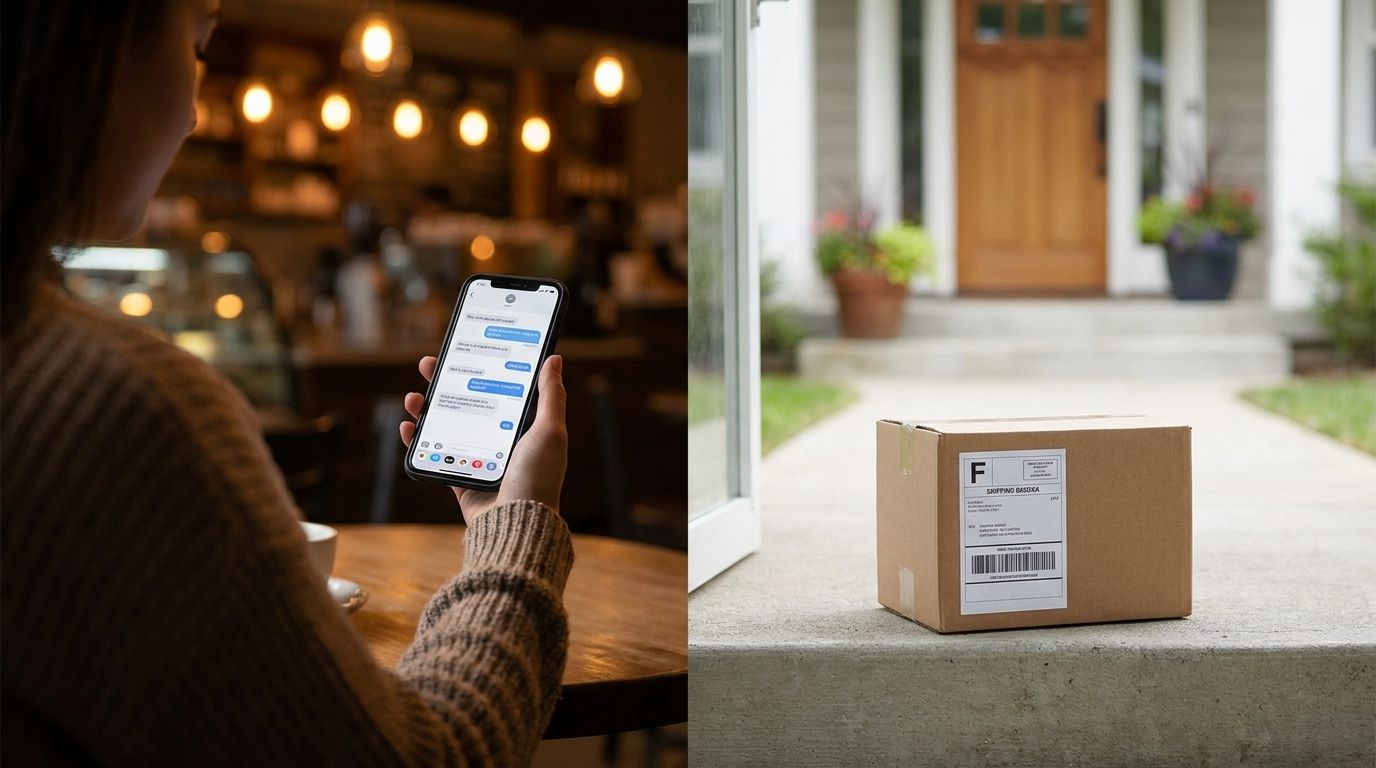
A customer messages you: "My package never arrived. Where is it?"
It's been 12 days since the carrier marked it delivered. The tracking shows it was left at the door. Your customer says it wasn't. You're now mediating a dispute between someone who wants their order (or their money back) and a carrier that may take weeks to investigate.
Lost and damaged package conversations are among the hardest in ecommerce. The customer is frustrated, you didn't cause the problem, and the financial risk sits with you until the carrier processes a claim. How you handle the first reply often decides whether you keep the customer or lose them.
The real cost of a lost package conversation
When a package goes missing, three clocks start ticking.
First, the customer's patience. Every day without an answer increases the chance they dispute the charge or leave a negative review.
Second, the carrier claims window. USPS, FedEx, UPS, and others each have their own deadlines. DPD requires notice within 10 days from the ship date. DHL eCommerce gives you 90 days from the first scan. Miss the window and you cover the cost.
Third, your margin. If you reship before the claim is approved, you're covering product cost, pick and pack, and a second round of shipping. If you refund immediately, you've lost the sale. If you wait for the carrier, you risk a chargeback.
The support team's job is to manage all three at once, and most stores don't have a clear process for it.
What to say in the first reply
Your first message sets expectations and buys you time to investigate. A good response acknowledges the problem, explains the next step, and gives a realistic timeline.
Example:
"I see the tracking shows delivery on [date], but you didn't receive it. I'm opening a trace with [carrier] now and will update you within 24 hours. In the meantime, can you confirm the delivery address and check with neighbors or building management?"
This reply shows you believe the customer, names a concrete action, and keeps the door open to simple explanations without accusing anyone.
If the package was marked damaged in transit, ask for photos. Carriers require images of the box, the shipping label, and the product for most claims. The faster you collect evidence, the faster you can file.
When to reship vs. refund vs. wait
There's no universal answer. It depends on the product's margin, the customer's lifetime value, and how clearly the carrier is at fault.
Reship immediately if:
- The item is low-cost or high-margin and you can absorb the risk
- The customer has ordered multiple times and has a clean history
- Tracking shows the package was never scanned past the origin facility
Offer a refund if:
- The customer explicitly asks for their money back
- The product is out of stock or seasonal
- The order value is high and you can't afford to double your exposure
Wait for the carrier investigation if:
- Tracking shows "delivered" but the customer claims it's missing (possible porch theft)
- The customer is new or the details don't match the data
- You've already reshipped once for this customer
Shopify's admin lets you file shipping claims directly for many carriers. You'll need the tracking number, order details, and proof of loss or damage. If you purchased shipping insurance through Shopify or a service like Shipsurance, file with the insurer first, not the carrier.
How to escalate to the carrier without slowing down the customer
Customers don't care about your carrier's claims process. They care about getting what they paid for.
While you're filing the claim, keep the customer updated every 48 to 72 hours. Even a short message ("Still waiting on [carrier]; I'll follow up again by [date]") prevents them from assuming you've forgotten.
If the carrier asks the customer to confirm details, make it easy. Draft the message for them, include exactly what the carrier needs, and thank them in advance.
For USPS shipments through Shopify, you can contact Shopify Support for help with rerouting or claims. FedEx and UPS claims go directly to the carrier.
For international shipments through Managed Markets, Shopify's help center notes you'll need the receiver's phone number and a screenshot of messages confirming the loss or damage when you file.
Automate the first response and the follow-up cadence
Many lost package conversations follow the same structure. The customer reports the issue. You ask clarifying questions. You open a case. You follow up.
An AI agent can handle the initial exchange: pull the tracking status, compare it to the delivery address on file, ask for photos if "damaged" appears in the scan history, and explain what happens next. It can also follow up with the customer so your team isn't managing a spreadsheet of open claims.
Kolton connects to your Shopify orders and can see tracking details, shipping method, and order history when a customer writes in. That means it can spot a lost package conversation, retrieve the right data, and draft a reply that references the specific order. The inbox shows the draft and you can send it in one click, or let the agent reply autonomously once you trust it.
On Kolton's Pro and Max plans, the agent also handles personalized follow-ups, so a customer who reported a missing package on Monday gets a proactive update on Wednesday even if you haven't heard back from the carrier yet.
When a lost package turns into a refund or upsell opportunity
Sometimes the package is gone for good and the claim will take weeks. If you're issuing a refund or store credit, you have a choice: close the conversation or turn it into a next purchase.
Refund-only close:
"I've processed a full refund of $[amount]. You'll see it in 5-7 business days. I'm sorry this happened."
Refund with store credit incentive (hypothetical example):
"I've issued a $[amount] refund. I'm also adding a $[incentive amount] credit to your account so your next order ships free. Again, really sorry for the hassle."
If the customer was excited about the product and it's back in stock, offer to reship at a discount or with expedited shipping at no charge. Some customers will take that deal, especially if you've kept them informed and they don't blame you for the carrier failure.
For tactics on keeping the sale when a customer asks for a refund, see Handle Refund Requests: Offer Alternatives That Keep the Sale. If you're reshipping and want to add a complementary item to recover margin, How to Increase Average Order Value Through Conversation Without Sounding Pushy covers how to make the suggestion feel helpful.
Protect yourself before the package goes missing
The best lost package conversation is the one you never have. You can't eliminate carrier mistakes, but you can reduce how often they become crises.
Add delivery confirmation for high-value orders. Signature required costs extra and provides proof of handoff. It won't stop porch theft, but it can help in chargeback disputes.
Use shipping insurance. Shopify Shipping includes some coverage depending on the service. You can also buy additional insurance through the label flow. If you use a third-party insurance provider like Shipsurance, file claims with them instead of the carrier.
Set clear delivery expectations at checkout. If you're shipping to an area with known theft issues or apartment buildings with confusing layouts, let customers add special instructions. A note that says "leave with front desk" or "don't leave outside" can prevent some missing package tickets.
Track delivery and reach out first. If a package shows delivered but the customer hasn't opened a post-purchase email or left a review within a few days, send a quick "Did everything arrive okay?" message. Proactive outreach catches problems before they become disputes.
For more on handling the conversation when a package is delayed but not lost, see How to Communicate Shipping Delays Without Losing the Customer.
What to automate and what to hand off
Not every lost package case should be handled the same way. A low-value item reported missing after two weeks is different from a high-value custom order that shows delivered yesterday.
Automate the initial response, the data lookup, and the routine follow-ups. Consider handing off to a human when the customer is angry, the order value is high, or the situation is ambiguous (tracking says delivered, customer says it's not there, and the facts are unclear).
Kolton's agent can recognize when it should escalate. If a customer writes "This is the second time you've lost my order" or uses language that signals frustration, the agent can route the conversation to your team instead of replying on its own. You control the rules.
For more on setting those boundaries, see Setting Guardrails for AI Support: What to Automate and What to Escalate.
Turn a carrier failure into a retention opportunity
A lost or damaged package is a test. The customer is watching to see whether you'll make it right or hide behind the carrier.
Respond fast. Give them a clear path forward. Keep them updated. And when you can, reship or refund without making them fight for it.
The stores that do this well don't lose customers when a package goes missing. They build trust. And the next time that customer needs something, they'll order again, because they know you'll take care of them if something goes wrong.
If you want to handle lost package conversations faster without adding another support person, take a look at Kolton's pricing and see which plan fits your volume. Every plan includes access to live order data, so the agent (or your team using the shared inbox) can answer "Where's my order?" and "My package is missing" without jumping between tabs.
Key takeaways
- Your first reply to a lost package report should acknowledge the issue, name a concrete next step, and set a realistic timeline. This buys you time to investigate without losing the customer's trust.
- Decide whether to reship, refund, or wait based on product margin, customer history, and tracking data. Not every case should be handled the same way.
- File carrier claims inside the Shopify admin as soon as you confirm loss or damage. DPD requires notice within 10 days; DHL eCommerce gives you 90 days from the first scan.
- An AI agent can automate the first response and follow-up messages so customers get updates every 48 to 72 hours without your team tracking each case manually.
- Use shipping insurance and delivery confirmation on high-value orders to reduce your exposure when a package does go missing.
Frequently asked questions
- Should I reship before the carrier approves the claim?
- It depends on the product margin and customer lifetime value. For low-cost or high-margin items and repeat customers, reshipping immediately can build loyalty. For high-value or low-margin products, wait for the carrier investigation or offer a refund instead. If you reship before the claim closes, you're covering the cost of two shipments until the carrier reimburses you, if they do.
- How long does a carrier take to process a lost package claim?
- It varies by carrier and case complexity. Straightforward cases may resolve within days, but complex claims can take several weeks. DHL eCommerce gives you 90 days to file from the first scan. DPD requires notice within 10 days from the ship date. Always file as soon as you confirm the issue to avoid missing the carrier's deadline.
- What if tracking says delivered but the customer never got it?
- Start by asking the customer to check with neighbors, building management, or another household member. Confirm the delivery address matches what they expected. If the package is still missing after 24 to 48 hours, open a trace with the carrier and explain that the recipient didn't receive it. Many carriers offer GPS delivery confirmation that can show where the driver left the package. If it's clear the package was stolen after delivery, that typically isn't covered by carrier liability, but shipping insurance may cover theft depending on your policy.
- Can I automate responses to lost package inquiries?
- Yes. An AI agent can pull tracking data, ask clarifying questions, explain the claims process, and update the customer while you wait for the carrier. It can also escalate to a human when needed. Kolton connects to your Shopify orders so it can see tracking status and order details when a customer writes in, and it drafts replies based on the specific situation.
- Do I need shipping insurance on every order?
- Not necessarily. Carriers include some base coverage on many services. If your average order value is higher or you're shipping fragile or high-value items, additional insurance makes sense. Calculate how often you'd need a claim to cover the cost of insuring every package. For most stores, insuring orders above a certain threshold is a reasonable middle ground.
Sources

About the author
Mario
Mario Horvat builds Kolton, the AI agent that helps Shopify stores turn conversations across chat, DMs and social comments into orders. He focuses on how the agent answers shoppers from a store's live catalog, stock and order data.
View profile →